
Huawei Mate 8 vs Samsung Google Nexus S Comparison and Differences
Smartphone 1
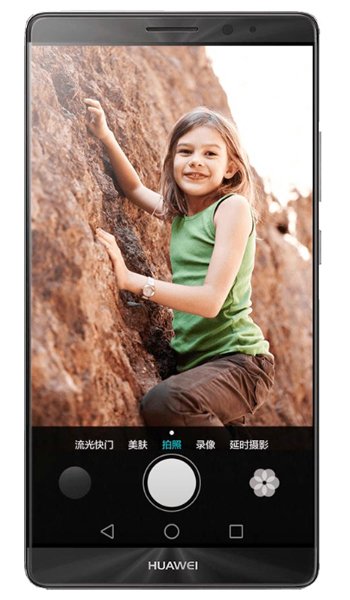
Huawei Mate 8
Smartphone 2
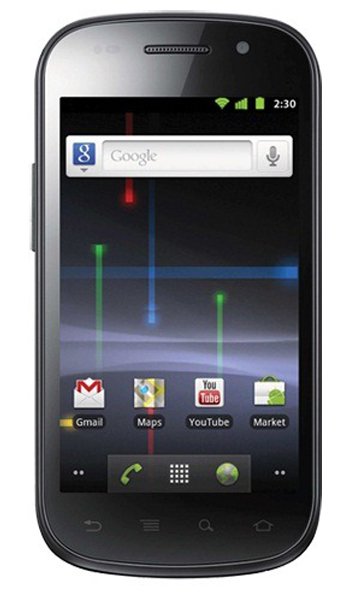
Samsung Google Nexus S
Smartphone 3
Huawei Mate 8 or Samsung Google Nexus S Specs Comparison
or
 Common specs
| Brand and model | Huawei Mate 8 | Samsung Google Nexus S | |
| Rating | (+0) | (+0) | |
| Release date | 2015, November | 2010, December | |
| Dimensions (HxWxD) | 157.1 x 80.6 x 7.9 mm | 6.19 x 6.19 x 3.17 in | 123.9 x 63 x 10.9 mm | 4.88 x 4.88 x 2.48 in | |
| Weight | 185 g | 6.53 oz | 129 g | 4.55 oz | |
| Body Build | Front glass, aluminum body | ||
| Case | buy from Amazon | buy from Amazon | |
| Colors | Champagne Gold, Moonlight Silver, Space Gray, Mocha Brown | Black, White | |
| Battery | 4000 mAh, Non-removable Li-Po | 1500 mAh, Removable Li-Ion | |
| Battery life |
Stand by time - Up to 528 h (3G) Music play - Up to 98 h |
Stand by time - Up to 713 h (2G) / Up to 428 h (3G) Talking time - Up to 14 h (2G) / Up to 6 h 40 min (3G) |
|
| Approximate price | 300 EUR | 170 EUR | |
| Check price | from Amazon | from Amazon |
 Screen
| Technology | IPS-NEO LCD | Super AMOLED | |
| Touchscreen | capacitive touchscreen | capacitive touchscreen | |
| Display colors | 16M | 16M | |
| Screen size | 6" in | 4" in | |
| Screen area | 98.7 cm2 | 45.5 cm2 | |
| Screen format | 16:9 (height:width) | 5:3 (height:width) | |
| Screen to body ratio | 78.0% | 58.3% | |
| Screen resolution | 1080 x 1920 px | 480 x 800 px | |
| Screen PPI /points per inch/ | 368 PPI | 233 PPI | |
| Screen protection | Corning Gorilla Glass 3 | Oleophobic coating | |
| Screen protector | buy from Amazon | buy from Amazon |
 Camera and Video
| Rear camera, main | 16 MP, Single | 5 MP, Single | |
| Camera specs | -16 MP, f/2.0, 27mm (wide), 1/2.8'', OIS, PDAF | -5 MP, AF | |
| Functions | Dual-LED dual-tone flash, panorama, HDR | LED flash | |
| Video | 1080p@60fps, 1080p@30fps, 720p@120fps | w480p@30fps | |
| Front camera, selfie | 8 MP, Single | 0.3 MP, Single | |
| Specifications | 8 MP, f/2.4, 26mm (wide) | VGA | |
| Video | 1080p@30fps |
 Performance
| Operating system - OS | Android 6.0 (Marshmallow), upgradable to 7.0 (Nougat); EMUI 4 | Android 2.3 (Gingerbread), 4.1.2 (Jelly Bean), not upgradable to 4.2 (Jelly Bean) | |
| Chipset | - HiSilicon Kirin 950 (16 nm) | - Hummingbird Exynos | |
| CPU | - Octa-core (4x2.3 GHz Cortex-A72 & 4x1.8 GHz Cortex A53) | - 1.0 GHz Cortex-A8 | |
| GPU | Mali-T880 MP4 | PowerVR SGX540 | |
| External memory | microSD, up to 256 GB (uses SIM 2 slot) | No | |
| Internal memory | 32 GB, 3 GB RAM - NXT-L09, NXT-L29 64 GB, 4 GB RAM - NXT-L29 |
16 GB, 512 MB RAM |
 Benchmark
| Antutu 7 Total | |||
| GeekBench 6 Single Core | 363 | ||
| GeekBench 6 Multi Core | 1131 | ||
| GeekBench 5 Single Core | 339 | ||
| GeekBench 5 Multi-Core | 1273 | ||
| GeekBench 4 Single Core | 1683 | ||
| GeekBench 4 Multi-Core | 5282 | ||
| GeekBench 4 RenderScript | 3812 |
 Communication and Connectivity
| SIM card | Nano-SIM - NXT-L09Hybrid Dual SIM (Nano-SIM, dual stand-by) - NXT-L29 | Mini-SIM | |
| Network | GSM / HSPA / LTE | GSM / HSPA | |
| Bands | -2G - GSM 850 / 900 / 1800 / 1900 - SIM 1 & SIM 2 (optional) -3G - HSDPA 800 / 850 / 900 / 1700(AWS) / 1900 / 2100 - NXT-L29, NXT-L09 -4G - LTE band 1(2100), 2(1900), 3(1800), 4(1700/2100), 5(850), 6(900), 7(2600), 8(900), 12(700), 17(700), 18(800), 19(800), 20(800), 26(850), 38(2600), 39(1900), 40(2300) - NXT-L29 LTE band 1(2100), 2(1900), 3(1800), 4(1700/2100), 5(850), 6(900), 7(2600), 8(900), 12(700), 17(700), 18(800), 19(800), 20(800), 26(850), 28(700), 38(2600), 39(1900), 40(2300) - NXT-L09 |
-2G - GSM 850 / 900 / 1800 / 1900 |
|
| Speed | HSPA 42.2/5.76 Mbps, LTE-A (2CA) Cat6 300/50 Mbps | HSPA 7.2/5.76 Mbps | |
| GPRS | Yes | Yes | |
| Edge | Yes | Yes | |
| Wi-Fi | Wi-Fi 802.11 a/b/g/n/ac, dual-band, DLNA, WiFi Direct, hotspot | Wi-Fi 802.11 b/g/n, DLNA, hotspot | |
| GPS | Yes, with A-GPS, GLONASS, BDS | Yes, with A-GPS | |
| NFC | Yes | Yes | |
| USB | microUSB 2.0, USB Host | microUSB 2.0 | |
| Bluetooth | 4.2, A2DP, EDR, LE | 2.1, A2DP | |
| Harmful irradiation |
SAR - 1.49 W/kg (head) 0.32 W/kg (body) SAR EU - 1.46 W/kg (head) 0.21 W/kg (body) |
SAR - 0.58 W/kg (head) 0.90 W/kg (body) SAR EU - 0.47 W/kg (head) |
 Music and Audio
| Radio | FM radio | No | |
| Headphone jack | Yes | Yes | |
| Others | - 24-bit/192kHz audio -Active noise cancellation with dedicated mic |
 Other features
| Sensors | - Fingerprint (rear-mounted), accelerometer, gyro, proximity, barometer, compass | - Accelerometer, gyro, proximity, compass | |
| Other extras |
- Fast battery charging: 37% in 30 min |
- MP4/H.264 player -MP3/WAV/eAAC+ player -Organizer -Photo/video editor -Voice memo/dial/commands -Predictive text input -Near Field Communications |
|
| Versions |
- Also known as Huawei Ascend Mate8 |
- Previously known as Samsung i9020 |
Reviews and Opinions on Huawei Mate 8 and Samsung Google Nexus S
If you had to recommend one of these phones to a friend, which one would it be and why? Share your arguments using the Add Opinion button!