
Oppo Find X7 Ultra vs Oppo Find X8 Pro compare
The best smartphone comparison tool: compare Oppo Find X7 Ultra vs Oppo Find X8 Pro and choose the best model for you
Smartphone 1
Remove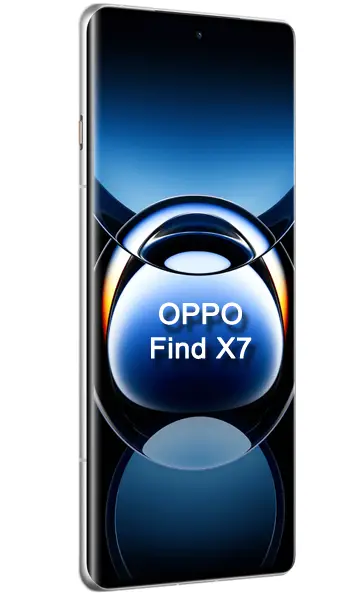
Oppo Find X7 Ultra
Smartphone 2
Remove
Oppo Find X8 Pro
Smartphone 3
Oppo Find X7 Ultra vs Oppo Find X8 Pro
What is the difference between the Oppo Find X7 Ultra and Oppo Find X8 Pro? Which one is better? The answers to these questions and many more can be found here in this detailed comparison of the two phones. Discover the differences in specs between these two desirable devices, from screen size to battery life, in the table below. We have all the information you need to choose the best phone for you.
or
 Common specs
| Brand and model | Oppo Find X7 Ultra | Oppo Find X8 Pro | |
| Rating | (+) | (+) | |
| Review | |||
| Release date | 2024, January 08 | 2024, October 24 | |
| Dimensions (HxWxD) | 164.3 x 76.2 x 9.5 mm | 6.47 x 6.47 x 3 in | 162.3 x 76.7 x 8.2 mm | 6.39 x 6.39 x 3.02 in | |
| Weight | 221 g | 7.8 oz | 215 g | 7.58 oz | |
| Body Build | Glass front (Gorilla Glass Victus 2), glass back (Gorilla Glass) or eco leather back, aluminum frame | Glass front (Gorilla Glass Victus 2), glass back, aluminum frame | |
| Colors | Black, Dark Blue, Light Brown | Black, White, Blue | |
| Battery | 5000 mAh, , non-removable | 5910 mAh, Si/C, non-removable | |
| Approximate price | 770 EUR | 700 EUR |
 Screen
| Technology | LTPO AMOLED | LTPO AMOLED | |
| Touchscreen | capacitive touchscreen | capacitive touchscreen | |
| Display colors | 1B | 1B | |
| Screen size | 6.82" inc | 6.78" inc | |
| Screen area | 113.0 cm2 | 111.7 cm2 | |
| Screen format | |||
| Screen to body ratio | 90.3% | 89.8% | |
| Screen resolution | 1440 x 3168 px | 1264 x 2780 px | |
| Screen PPI /points per inch/ | 510 PPI | 450 PPI | |
| Screen protection | Corning Gorilla Glass Victus 2 | Corning Gorilla Glass Victus 2 | |
| Other specs | - 120Hz, Dolby Vision, HDR10+, 1600 nits (typ), 2600 nits (HBM), 4500 nits (peak) - |
- 120Hz, Dolby Vision, HDR10+, 800 nits (typ), 1600 nits (HBM), 4500 nits (peak) -HDR image support |
 Camera and Video
| Rear camera, main | 50 MP, Quad | 50 MP, Quad | |
| Camera specs | -50 MP, f/1.8, 23mm (wide), 1.0"-type, 1.6µm, multi-directional PDAF, OIS -50 MP, f/2.6, 65mm (periscope telephoto), 1/1.56", 1.0µm, 2.8x optical zoom, multi-directional PDAF (25cm - ∞), OIS -50 MP, f/4.3, 135mm (periscope telephoto), 1/2.51", 0.7µm, 6x optical zoom, dual pixel PDAF (35cm - ∞), OIS -50 MP, f/2.0, 14mm, 123˚ (ultrawide), 1/1.95", 1.0µm, PDAF |
-50 MP, f/1.6, 23mm (wide), PDAF, OIS -50 MP, f/2.6, 73mm (periscope telephoto), 3x optical zoom, PDAF, OIS -50 MP, f/4.3, 135mm (periscope telephoto), 1/2.51", 0.7µm, 6x optical zoom, dual pixel PDAF (35cm - ∞), OIS -50 MP, f/2.0, 15mm, 120˚ (ultrawide), PDAF |
|
| Functions | Laser AF, Hasselblad Color Calibration, LED flash, HDR, panorama | Laser AF, Hasselblad Color Calibration, LED flash, HDR, panorama | |
| Video | 4K@30/60fps, 1080p@30/60/240fps; gyro-EIS; HDR, 10‑bit video, Dolby Vision | 4K@30/60fps, 1080p@30/60/240fps; gyro-EIS; HDR, 10‑bit video, Dolby Vision | |
| DxOMark Main Score | 157 | 157 | |
| DxOMark Photo | 156 | 160 | |
| DxOMark Video | 156 | 151 | |
| Front camera, selfie | 32 MP, Single | 32 MP, Single | |
| Specifications | 32 MP, f/2.4, 21mm (wide), 1/2.74", 0.8µm, PDAF | 32 MP, f/2.4, 21mm (wide), 1/2.74", 0.8µm | |
| Functions | Panorama | Panorama | |
| Video | 4K@30/60fps, 1080p@30fps, gyro-EIS | 4K@30/60fps, 1080p@30/60fps, gyro-EIS |
 Performance
| Operating system - OS | Android 14, up to 4 major Android upgrades, ColorOS 14 | Android 15, ColorOS 15 | |
| Chipset | - Qualcomm SM8650-AB Snapdragon 8 Gen 3 (4 nm) | - Mediatek Dimensity 9400 (3 nm) | |
| Processor CPU | - Octa-core (1x3.3 GHz Cortex-X4 & 3x3.2 GHz Cortex-A720 & 2x3.0 GHz Cortex-A720 & 2x2.3 GHz Cortex-A520) | - Octa-core (1x3.63 GHz Cortex-X925 & 3x3.3 GHz Cortex-X4 & 4x2.4 GHz Cortex-A720) | |
| Graphics processor GPU | Adreno 750 | Immortalis-G925 | |
| External memory | No | No | |
| Internal memory | 256GB 12GB RAM, 256GB 16GB RAM, 512GB 16GB RAM | 256GB 12GB RAM, 512GB 12GB RAM, 512GB 16GB RAM, 1TB 16GB RAM |
 Benchmark
 Communication and Connectivity
| SIM card | Dual SIM (Nano-SIM, dual stand-by) | Dual SIM (Nano-SIM, dual stand-by) | |
| Network | GSM / CDMA / HSPA / CDMA2000 / LTE / 5G | GSM / HSPA / LTE / 5G | |
Show all network frequencies: |
|||
| Speed | HSPA, LTE, 5G | HSPA, LTE, 5G | |
| GPRS | Yes | Yes | |
| Edge | Yes | Yes | |
| Wi-Fi | Wi-Fi 802.11 a/b/g/n/ac/6e/7, dual-band, Wi-Fi Direct | Wi-Fi 802.11 a/b/g/n/ac/6/7, dual-band, Wi-Fi Direct | |
| GPS | GPS (L1+L5), BDS (B1I+B1c+B2a), GALILEO (E1+E5a), QZSS (L1+L5), GLONASS | GPS (L1+L5), BDS (B1I+B1c+B2a+B2b), GALILEO (E1+E5a+E5b), QZSS (L1+L5), GLONASS, NavIC (L5) | |
| NFC | Yes; NFC-SIM, HCE, eSE, eID | Yes; NFC-SIM, HCE, eSE, eID | |
| USB | USB Type-C 3.2, OTG | USB Type-C 3.1, OTG | |
| Bluetooth | 5.4, A2DP, LE, aptX HD, LHDC | 5.4, A2DP, LE, aptX HD, LHDC 5 | |
 Music and Audio
| Radio | No | No | |
| Headphone jack | No | No | |
| Others |
 Other features
| Sensors | - Fingerprint (under display, optical), accelerometer, gyro, proximity, compass, color spectrum , Infrared port | - Fingerprint (under display, optical), accelerometer, gyro, proximity, compass, color spectrum , Infrared port | |
| Other extras |
- Emergency SOS via satellite (messages and calls) available in Oppo Find X7 Ultra Satellite version (PHY120) - 100W Fast charging, Power Delivery , 50% in 10 min, 100% in 26 min -50W Wireless charging -10W Reverse wireless charging - IP68 dust/water resistant (up to 1.5m for 30 min) |
- Satellite connectivity support (PKC130, 1TB 16GB RAM model only) - 80W Fast charging, Power Delivery , PPS, UFCS -50W Wireless charging - IP68/IP69 dust/water resistant (up to 1.5m for 30 min) |
Share on Share on