
Xiaomi Mi 9T Pro vs Apple iPhone 13 compare
The best smartphone comparison tool: compare Xiaomi Mi 9T Pro vs Apple iPhone 13 and choose the best model for you
Smartphone 1
Remove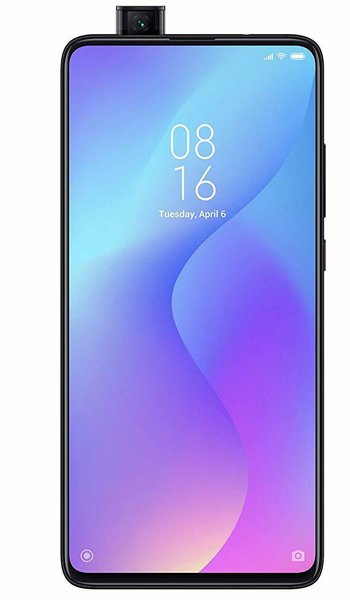
Xiaomi Mi 9T Pro
Smartphone 2
Remove
Apple iPhone 13
Smartphone 3
Xiaomi Mi 9T Pro vs Apple iPhone 13
What is the difference between the Xiaomi Mi 9T Pro and Apple iPhone 13? Which one is better? The answers to these questions and many more can be found here in this detailed comparison of the two phones. Discover the differences in specs between these two desirable devices, from screen size to battery life, in the table below. We have all the information you need to choose the best phone for you.
or
 Common specs
| Brand and model | Xiaomi Mi 9T Pro | Apple iPhone 13 | |
| Rating | (+) | (+) | |
| Review | Apple iPhone 13 Review | ||
| Release date | 2019, August | 2021, September 14 | |
| Dimensions (HxWxD) | 156.7 x 74.3 x 8.8 mm | 6.17 x 6.17 x 2.93 in | 146.7 x 71.5 x 7.7 mm | 5.78 x 5.78 x 2.81 in | |
| Weight | 191 g | 6.74 oz | 174 g | 6.14 oz | |
| Body Build | Front/back glass (Gorilla Glass 5), aluminum frame | Glass front, glass back, aluminum frame | |
| Colors | Carbon black, Red flame, Glacier blue, White | Starlight, Midnight, Blue, Pink, Red, Green | |
| Battery | 4000 mAh, Non-removable Li-Po | 3240 mAh, Li-Ion | |
| Battery life |
Stand by time - Up to 19 h (multimedia) Music play - Up to 75 h |
||
| Body Form | Apple | ||
| Approximate price | 430 EUR | $ 261.36 |
 Screen
| Technology | Super AMOLED | Super Retina XDR OLED | |
| Touchscreen | capacitive touchscreen | capacitive touchscreen | |
| Display colors | 16M | 16M | |
| Screen size | 6.39" inc | 6.1" inc | |
| Screen area | 100.2 cm2 | 90.2 cm2 | |
| Screen format | 19.5:9 (height:width) | 19.5:9 (height:width) | |
| Screen to body ratio | 86.1% | 86.0% | |
| Screen resolution | 1080 x 2340 px | 1170 x 2532 px | |
| Screen PPI /points per inch/ | 403 PPI | 460 PPI | |
| Screen protection | Corning Gorilla Glass 5 | Ceramic Shield glass | |
| Other specs | - HDR | - HDR10, Dolby Vision, 800 nits (HBM), 1200 nits (peak) - |
 Camera and Video
| Rear camera, main | 48 MP, Triple | 12 MP, Dual | |
| Camera specs | -48 MP, f/1.8, 26mm (wide), 1/2'', 0.8µm, PDAF, Laser AF -8 MP, f/2.4, 53mm (telephoto), 1/4'', 1.12µm, PDAF, Laser AF, 2x optical zoom -13 MP, f/2.4, 12mm (ultrawide), 1/3'', 1.12µm |
-12 MP, f/1.6, 26mm (wide), 1/1.9", 1.7µm, dual pixel PDAF, sensor-shift OIS -12 MP, f/2.4, 120˚, 13mm (ultrawide), 1/3.4", 1.0µm |
|
| Functions | Dual-LED flash, HDR, panorama | Dual-LED dual-tone flash, HDR (photo/panorama) | |
| Video | 2160p@30/60fps, 1080p@30/120/240fps, 1080p@960fps | 4K@24/25/30/60fps, 1080p@25/30/60/120/240fps, HDR, Dolby Vision HDR (up to 60fps), stereo sound rec. | |
| DxOMark Main Score | 130 | ||
| DxOMark Photo | 138 | ||
| DxOMark Video | 117 | ||
| Front camera, selfie | 20 MP, Single | 12 MP, Single | |
| Specifications | Motorized pop-up 20 MP, f/2.2, 0.8µm | 12 MP, f/2.2, 23mm (wide), 1/3.6", 1.0µm SL 3D, (depth/biometrics sensor) |
|
| Functions | HDR | HDR | |
| Video | 1080p@30fps | 4K@24/25/30/60fps, 1080p@25/30/60/120fps, gyro-EIS | |
| DxOMark Selfie Score | 99 | ||
| DxOMark Photo | 102 | ||
| DxOMark Video | 95 |
 Performance
| Operating system - OS | Android 9.0 (Pie); MIUI 10 | iOS 15, upgradable to iOS 26.4 | |
| Chipset | - Qualcomm SM8150 Snapdragon 855 (7 nm) | - Apple A15 Bionic (5 nm) | |
| Processor CPU | - Octa-core (1x2.84 GHz Kryo 485 & 3x2.42 GHz Kryo 485 & 4x1.8 GHz Kryo 485) | - Hexa-core (2x3.23 GHz Avalanche + 4x1.82 GHz Blizzard) | |
| Graphics processor GPU | Adreno 640 | Apple GPU (4-core graphics) | |
| External memory | No | No | |
| Internal memory | 64GB 6GB RAM, 128GB 6GB RAM, 256GB 8GB RAM | 128GB 4GB RAM, 256GB 4GB RAM, 512GB 4GB RAM |
 Benchmark
| Antutu 10 Total | 617740 | 1238187 | |
| Antutu 10 CPU | 192583 | 317254 | |
| Antutu 10 GPU | 186283 | 394639 | |
| Antutu 10 Mem | 104973 | 218353 | |
| Antutu 10 UX | 192583 | 317254 | |
| Antutu 9 Total | 826703 | ||
| Antutu 8 Total | 442943 | ||
| Antutu 7 Total | |||
| GeekBench 6 Single Core | 857 | 2190 | |
| GeekBench 6 Multi Core | 2513 | 5189 | |
| GeekBench 6 OpenCL | 2515 | ||
| GeekBench 6 Vulkan | 2153 | ||
| GeekBench 6 Metal | 17405 | ||
| GeekBench 5 Single Core | 681 | 1699 | |
| GeekBench 5 Multi-Core | 2570 | 4499 | |
| GeekBench 4 Single Core | 3536 | ||
| GeekBench 4 Multi-Core | 11199 |
 Communication and Connectivity
| SIM card | Dual SIM (Nano-SIM, dual stand-by) | · Nano-SIM + eSIM · Nano-SIM + Nano-SIM |
|
| Network | GSM / HSPA / LTE | GSM / CDMA / HSPA / EVDO / LTE / 5G | |
Show all network frequencies: |
|||
| Speed | HSPA 42.2/5.76 Mbps, LTE-A | HSPA, LTE, 5G, EV-DO Rev.A 3.1 Mbps | |
| GPRS | Yes | Yes | |
| Edge | Yes | Yes | |
| Wi-Fi | Wi-Fi 802.11 a/b/g/n/ac, dual-band, Wi-Fi Direct, hotspot | Wi-Fi 802.11 a/b/g/n/ac/6, dual-band, hotspot | |
| GPS | Yes, with dual-band A-GPS, GLONASS, BDS, GALILEO | GPS, GLONASS, GALILEO, BDS, QZSS | |
| NFC | Yes | Yes | |
| USB | 2.0, Type-C 1.0 reversible connector, USB On-The-Go | Lightning, USB 2.0 | |
| Bluetooth | 5.0, A2DP, LE, aptX HD | 5.0, A2DP, LE | |
| Harmful irradiation |
SAR - 1.03 W/kg (head) 0.72 W/kg (body) SAR EU - 1.30 W/kg (head) 1.51 W/kg (body) |
SAR - 1.18 W/kg (head) 1.19 W/kg (body) SAR EU - 0.99 W/kg (head) 0.98 W/kg (body) |
|
 Music and Audio
| Radio | Yes | No | |
| Headphone jack | Yes | No | |
| Others | - 24-bit/192kHz audio -Active noise cancellation with dedicated mic |
 Other features
| Sensors | - Fingerprint (under display), accelerometer, gyro, proximity, compass | - Face ID, accelerometer, gyro, proximity, compass, barometer | |
| Other extras |
- Fast battery charging 27W (Quick Charge 4+) |
- Ultra Wideband (UWB) support - Fast charging, Power Delivery 2.0, 50% in 30 min -15W Wireless charging (MagSafe) -15W Wireless charging (Qi2) - requires iOS 17.2 update - IP68 dust tight and water resistant (immersible up to 6m for 30 min) -Apple Pay (Visa, MasterCard, AMEX certified) |
|
| Versions |
- For Global market |
- Versions: A2633 (International); A2482 (USA); A2631 (Canada, Japan); A2634 (China, Hong Kong); A2635 (Russia) |
Share on Share on