
Xiaomi Redmi K40 Gaming vs Apple iPhone 13 Pro Max compare
The best smartphone comparison tool: compare Xiaomi Redmi K40 Gaming vs Apple iPhone 13 Pro Max and choose the best model for you
Smartphone 1
Remove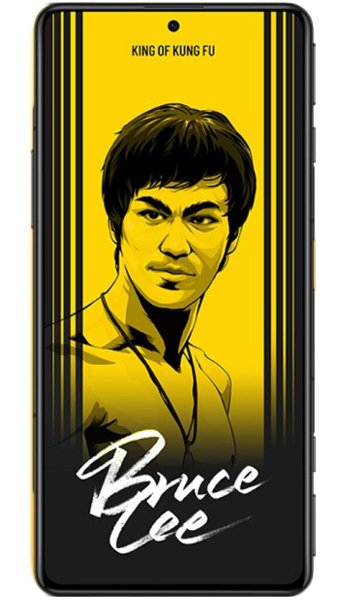
Xiaomi Redmi K40 Gaming
Smartphone 2
Remove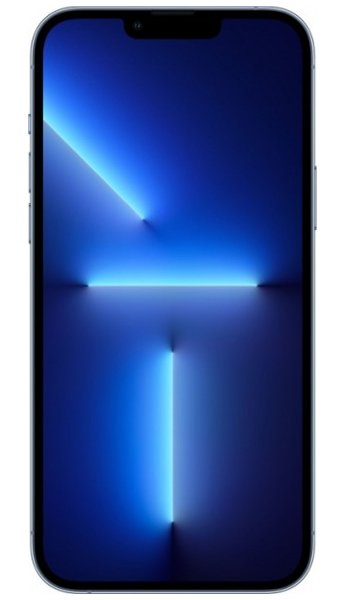
Apple iPhone 13 Pro Max
Smartphone 3
Xiaomi Redmi K40 Gaming vs Apple iPhone 13 Pro Max
What is the difference between the Xiaomi Redmi K40 Gaming and Apple iPhone 13 Pro Max? Which one is better? The answers to these questions and many more can be found here in this detailed comparison of the two phones. Discover the differences in specs between these two desirable devices, from screen size to battery life, in the table below. We have all the information you need to choose the best phone for you.
or
 Common specs
| Brand and model | Xiaomi Redmi K40 Gaming | Apple iPhone 13 Pro Max | |
| Rating | (+) | (+) | |
| Review | Apple iPhone 13 Pro Max Review | ||
| Release date | 2021, April 27 | 2021, September 14 | |
| Dimensions (HxWxD) | 161.9 x 76.9 x 8.3 mm | 6.37 x 6.37 x 3.03 in | 160.8 x 78.1 x 7.7 mm | 6.33 x 6.33 x 3.07 in | |
| Weight | 205 g | 7.23 oz | 240 g | 8.47 oz | |
| Body Build | Glass front (Gorilla Glass 5), glass back (Gorilla Glass 5) | Glass front (Gorilla Glass), glass back (Gorilla Glass), stainless steel frame | |
| Colors | Black, Gray, Silver, Bruce Lee Yellow | Graphite, Gold, Silver, Sierra Blue | |
| Battery | 5065 mAh, Li-Po, non-removable | 4352 mAh, Li-Ion, non-removable | |
| Battery life |
Stand by time - Up to 28 h (multimedia) Music play - Up to 95 h |
||
| Approximate price | 260 EUR | 1250 EUR |
 Screen
| Technology | OLED | Super Retina XDR OLED | |
| Touchscreen | capacitive touchscreen | capacitive touchscreen | |
| Display colors | 1B | 16M | |
| Screen size | 6.67" inc | 6.7" inc | |
| Screen area | 107.4 cm2 | 109.8 cm2 | |
| Screen format | 20:9 (height:width) | 19.5:9 (height:width) | |
| Screen to body ratio | 86.3% | 87.4% | |
| Screen resolution | 1080 x 2400 px | 1284 x 2778 px | |
| Screen PPI /points per inch/ | 395 PPI | 458 PPI | |
| Screen protection | Corning Gorilla Glass 5 | Scratch-resistant ceramic glass, oleophobic coating | |
| Other specs | - 120Hz -HDR10+ -500 nits (typ) |
- Wide color gamut -True-tone -120Hz -HDR10 -Dolby Vision -1000 nits (HBM) -1200 nits (peak) |
 Camera and Video
| Rear camera, main | 64 MP, Triple | 12 MP, Quad | |
| Camera specs | -64 MP, f/1.7, 26mm (wide), 1/2.0'', 0.7µm, PDAF -8 MP, f/2.2, 120˚ (ultrawide) -2 MP, f/2.4, (macro) |
-12 MP, f/1.5, 26mm (wide), 1.9µm, dual pixel PDAF, sensor-shift OIS -12 MP, f/2.8, 77mm (telephoto), PDAF, OIS, 3x optical zoom -12 MP, f/1.8, 13mm, 120˚ (ultrawide), PDAF -TOF 3D LiDAR scanner (depth) |
|
| Functions | Dual-LED flash, HDR, panorama | Dual-LED dual-tone flash, HDR (photo/panorama) | |
| Video | 4K@30fps, 1080p@30/60/120fps, 720p@960fps, HDR | 4K@24/30/60fps, 1080p@30/60/120/240fps, 10‑bit HDR, Dolby Vision HDR (up to 60fps), ProRes, Cinematic mode, stereo sound rec. | |
| DxOMark Main Score | 137 | ||
| DxOMark Photo | 144 | ||
| DxOMark Video | 119 | ||
| Front camera, selfie | 16 MP, Single | 12 MP, Dual | |
| Specifications | 16 MP | 12 MP, f/2.2, 23mm (wide), 1/3.6'' SL 3D, (depth/biometrics sensor) |
|
| Functions | HDR | HDR | |
| Video | 1080p@30fps, 720p@120fps, HDR | 4K@24/25/30/60fps, 1080p@30/60/120fps, gyro-EIS | |
| DxOMark Selfie Score | 134 | ||
| DxOMark Photo | 128 | ||
| DxOMark Video | 143 |
 Performance
| Operating system - OS | Android 11, MIUI 12.5 | iOS 15 | |
| Chipset | - MediaTek MT6893 Dimensity 1200 5G (6 nm) | - Apple A15 Bionic (5 nm) | |
| Processor CPU | - Octa-core (1x3.0 GHz Cortex-A78 & 3x2.6 GHz Cortex-A78 & 4x2.0 GHz Cortex-A55) | - Hexa-core (2x3.22 GHz Avalanche + 4xX.X GHz Blizzard) | |
| Graphics processor GPU | Mali-G77 MC9 | Apple GPU (5-core graphics) | |
| External memory | No | No | |
| Internal memory | 128GB 6GB RAM, 128GB 8GB RAM, 128GB 12GB RAM, 256GB 8GB RAM, 256GB 12GB RAM | 128GB 6GB RAM, 256GB 6GB RAM, 512GB 6GB RAM, 1TB 6GB RAM |
 Benchmark
| Antutu 10 Total | 1310010 | ||
| Antutu 10 CPU | 323794 | ||
| Antutu 10 GPU | 432981 | ||
| Antutu 10 Mem | 234550 | ||
| Antutu 10 UX | 323794 | ||
| Antutu 9 Total | 843813 | ||
| Antutu 8 Total | 688889 | ||
| GeekBench 6 Single Core | 1013 | 2290 | |
| GeekBench 6 Multi Core | 2765 | 5551 | |
| GeekBench 6 OpenCL | 4304 | ||
| GeekBench 6 Vulkan | 4484 | ||
| GeekBench 6 Metal | 20040 | ||
| GeekBench 5 Single Core | 821 | 1716 | |
| GeekBench 5 Multi-Core | 2889 | 4533 |
 Communication and Connectivity
| SIM card | Dual SIM (Nano-SIM, dual stand-by) | Single SIM (Nano-SIM and/or eSIM)Dual SIM (Nano-SIM/eSIM, dual stand-by) | |
| Network | GSM / CDMA / HSPA / CDMA2000 / LTE / 5G | GSM / CDMA / HSPA / EVDO / LTE / 5G | |
Show all network frequencies: |
|||
| Speed | HSPA 42.2/5.76 Mbps, LTE-A, 5G | HSPA 42.2/5.76 Mbps, LTE-A, 5G, EV-DO Rev.A 3.1 Mbps | |
| GPRS | Yes | Yes | |
| Edge | Yes | Yes | |
| Wi-Fi | Wi-Fi 802.11 a/b/g/n/ac/6, dual-band, Wi-Fi Direct, hotspot | Wi-Fi 802.11 a/b/g/n/ac/6, dual-band, hotspot | |
| GPS | Yes, with dual-band A-GPS, GLONASS, BDS, GALILEO, QZSS, NavIC | Yes, with A-GPS, GLONASS, GALILEO, BDS, QZSS | |
| NFC | Yes | Yes | |
| USB | USB Type-C 2.0, USB On-The-Go | Lightning, USB 2.0 | |
| Bluetooth | 5.2, A2DP, LE | 5.0, A2DP, LE | |
| Harmful irradiation |
SAR - 1.18 W/kg (head) 1.20 W/kg (body) SAR EU - 0.99 W/kg (head) 0.98 W/kg (body) |
||
 Music and Audio
| Radio | No | No | |
| Headphone jack | No | No | |
| Others | - 24-bit/192kHz audio -Tuned by JBL |
 Other features
| Sensors | - Fingerprint (side-mounted), accelerometer, gyro, proximity, compass, barometer, color spectrum , Infrared port | - Face ID, accelerometer, gyro, proximity, compass, barometer | |
| Other extras |
- Fast charging 67W, 100% in 42 min -Power Delivery 3.0 -Quick Charge 3+ - Physical pop-up gaming triggers -IP53, dust and splash protection |
- Siri natural language commands and dictation -Ultra Wideband (UWB) support - Fast charging 27W, 50% in 30 min -USB Power Delivery 2.0 -MagSafe wireless charging 15W -Qi magnetic fast wireless charging 7.5W - IP68 dust/water resistant (up to 6m for 30 mins) -Apple Pay (Visa, MasterCard, AMEX certified) |
Share on Share on