
ZTE Blade A72 5G vs Xiaomi Redmi 12C compare
The best smartphone comparison tool: compare ZTE Blade A72 5G vs Xiaomi Redmi 12C and choose the best model for you
Smartphone 1
Remove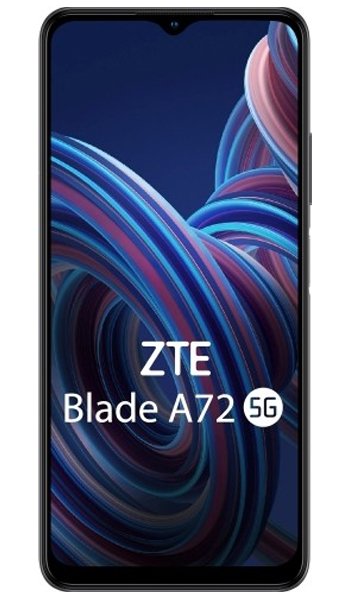
ZTE Blade A72 5G
Smartphone 2
Remove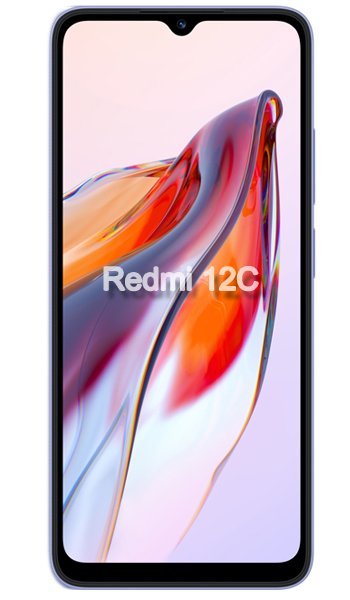
Xiaomi Redmi 12C
Smartphone 3
ZTE Blade A72 5G vs Xiaomi Redmi 12C
What is the difference between the ZTE Blade A72 5G and Xiaomi Redmi 12C? Which one is better? The answers to these questions and many more can be found here in this detailed comparison of the two phones. Discover the differences in specs between these two desirable devices, from screen size to battery life, in the table below. We have all the information you need to choose the best phone for you.
or
 Common specs
| Brand and model | ZTE Blade A72 5G | Xiaomi Redmi 12C | |
| Rating | (+) | (+) | |
| Review | Xiaomi Redmi 12C Review | ||
| Release date | June, 2022 | 2022, December 31 | |
| Dimensions (HxWxD) | 164 x 75.5 x 9.2 mm | 6.46 x 6.46 x 2.97 in | 168.8 x 76.4 x 8.8 mm | 6.65 x 6.65 x 3.01 in | |
| Weight | 211 g | 7.44 oz | 192 g | 6.77 oz | |
| Body Build | Polycarbonate | ||
| Colors | Blue, Gray | Black, Blue, Mint, Violet | |
| Battery | 4000 mAh, Li-Ion, non-removable | 5000 mAh, Li-Po, non-removable | |
| Approximate price | 110 EUR |
 Screen
| Technology | IPS LCD | IPS LCD | |
| Touchscreen | capacitive touchscreen | capacitive touchscreen | |
| Display colors | 16M | 16M | |
| Screen size | 6.52" inc | 6.71" inc | |
| Screen area | 102.6 cm2 | 106.5 cm2 | |
| Screen format | 20:9 (height:width) | ||
| Screen to body ratio | 82.9% | 82.6% | |
| Screen resolution | 720 x 1600 px | 720 x 1650 px | |
| Screen PPI /points per inch/ | 269 PPI | 0 PPI | |
| Screen protection | Scratch resistant | ||
| Other specs | - 90Hz | - 500 nits (typ) |
 Camera and Video
| Rear camera, main | 13 MP, Triple | 50 MP, Dual | |
| Camera specs | -13 MP, f/1.8, (wide), AF -2 MP (macro) -2 MP (depth) |
-50 MP, (wide), PDAF -2 MP (depth) |
|
| Functions | LED flash | LED flash, HDR | |
| Video | 1080p video | 1080p@30fps | |
| Front camera, selfie | 5 MP, Single | 5 MP, Single | |
| Specifications | 5 MP, Unknow | 5 MP | |
| Video | 720p@30fps | 1080p@30fps |
 Performance
| Operating system - OS | Android 11 | MIUI 13 | |
| Chipset | - Mediatek Dimensity 700 (7 nm) | - MediaTek MT6769Z Helio G85 (12nm) | |
| Processor CPU | - Octa-core (2x2.2 GHz Cortex-A76 & 6x2.0 GHz Cortex-A55) | - Octa-core (2x2.0 GHz Cortex-A75 & 6x1.8 GHz Cortex-A55) | |
| Graphics processor GPU | Mali-G57 MC2 | Mali-G52 MC2 | |
| External memory | microSDXC (uses shared SIM slot) | microSDXC (dedicated slot) | |
| Internal memory | 64GB 4GB RAM, 128GB 4GB RAM, 128GB 6GB RAM | 64GB 4GB RAM, 128GB 4GB RAM, 128GB 6GB RAM |
 Benchmark
| Antutu 9 Total | 310008 | 251773 | |
| GeekBench 5 Single Core | 414 | ||
| GeekBench 5 Multi-Core | 1257 |
 Communication and Connectivity
| SIM card | Hybrid Dual SIM (Nano-SIM, dual stand-by) | Dual SIM (Nano-SIM, dual stand-by) | |
| Network | GSM / HSPA / LTE / 5G | GSM / CDMA / HSPA / EVDO / LTE | |
Show all network frequencies: |
|||
| Speed | HSPA, LTE, 5G | HSPA, LTE | |
| GPRS | Yes | Yes | |
| Edge | Yes | Yes | |
| Wi-Fi | 802.11a, 802.11b, 802.11g, 802.11n, 802.11n 5GHz, 802.11ac,Dual band ,Wi-Fi Hotspot ,Wi-Fi Direct ,Wi-Fi Display | Wi-Fi 802.11 a/b/g/n/ac, dual-band, Wi-Fi Direct | |
| GPS | GPS, GLONASS | GPS, GLONASS, BDS, GALILEO | |
| NFC | Yes | Yes (market/region dependent) | |
| USB | USB Type-C 2.0, USB On-The-Go | microUSB 2.0 | |
| Bluetooth | Bluetooth 5.1, A2DP, LE | 5.1, A2DP, LE | |
 Music and Audio
| Radio | No | FM radio | |
| Headphone jack | Yes | Yes |
 Other features
| Sensors | - Fingerprint (side-mounted), accelerometer, proximity | - Fingerprint (rear-mounted), accelerometer, proximity | |
| Other extras |
- Fast charging 10W |
||
| Versions |
- Also known as ZTE Voyage 30, ZTE Yuanhang 30 |
Share on Share on