
O2 XDA Orbit II vs Honor 9 Lite Comparison and Differences
Smartphone 1
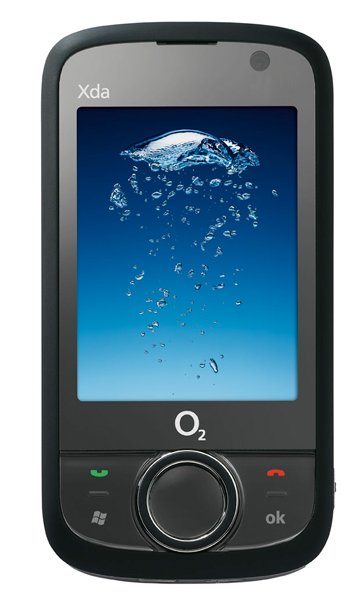
O2 XDA Orbit II
Smartphone 2
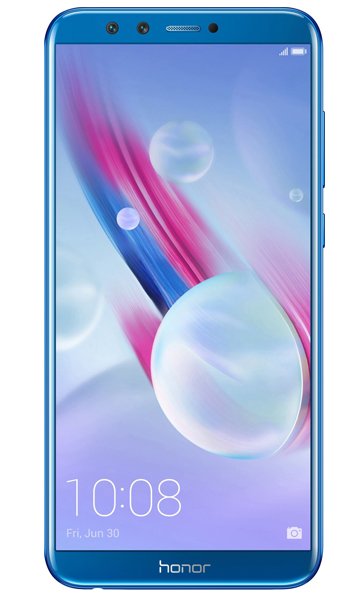
Honor 9 Lite
Smartphone 3
O2 XDA Orbit II or Honor 9 Lite Specs Comparison
or
 Common specs
| Brand and model | O2 XDA Orbit II | Honor 9 Lite | |
| Rating | (+) | (+) | |
| Release date | 2007, November | 2017, December | |
| Dimensions (HxWxD) | 110 x 58 x 15.5 mm | 4.33 x 4.33 x 2.28 in | 151 x 71.9 x 7.6 mm | 5.94 x 5.94 x 2.83 in | |
| Weight | 130 g | 4.59 oz | 149 g | 5.26 oz | |
| Body Build | Front/back glass, aluminum frame | ||
| Case | buy from Amazon | buy from Amazon | |
| Colors | Black | Midnight Black, Sapphire Blue, Glacier Gray, Navy, Seagull Gray, Magic Nightfall, Pearl White | |
| Battery | 1350 mAh, Removable Li-Ion | 3000 mAh, Non-removable Li-Po | |
| Battery life |
Stand by time - Up to 400 h (2G) / Up to 450 h (3G) Talking time - Up to 7 h (2G) / Up to 4 h (3G) |
||
| Approximate price | 190 EUR | ||
| Check price | from Amazon | from Amazon |
 Screen
| Technology | TFT | IPS LCD | |
| Touchscreen | resistive touchscreen | capacitive touchscreen | |
| Display colors | 65K | 16M | |
| Screen size | 2.8" in | 5.65" in | |
| Screen area | 24.3 cm2 | 82.0 cm2 | |
| Screen format | 4:3 (height:width) | 18:9 (height:width) | |
| Screen to body ratio | 38.1% | 75.5% | |
| Screen resolution | 240 x 320 px | 1080 x 2160 px | |
| Screen PPI /points per inch/ | 143 PPI | 428 PPI | |
| Other specs | - TouchFLO finger swipe navigation -Handwriting recognition -4-way navigation wheel |
||
| Screen protector | buy from Amazon | buy from Amazon |
 Camera and Video
| Rear camera, main | 3.15 MP, Single | 13 MP, Dual | |
| Camera specs | -3.15 MP, AF | -13 MP, PDAF -2 MP, depth sensor |
|
| Functions | LED flash, HDR, panorama | ||
| Video | Yes | 1080p@30fps | |
| Front camera, selfie | 0.3 MP, Single | 13 MP, Dual | |
| Specifications | VGA | 13 MP 2 MP, depth sensor |
|
| Video | 1080p@30fps |
 Performance
| Operating system - OS | Microsoft Windows Mobile 6.0 Professional | Android 8.0 (Oreo); EMUI 8 | |
| Chipset | - Qualcomm MSM7200 | - HiSilicon Kirin 659 (16 nm) | |
| CPU | - 400 MHz ARM 11 | - Octa-core (4x2.36 GHz Cortex-A53 & 4x1.7 GHz Cortex-A53) | |
| GPU | Adreno 130 | Mali-T830 MP2 | |
| External memory | microSD (dedicated slot), SD 2.0 compatible | microSD, up to 256 GB (uses SIM 2 slot) | |
| Internal memory | 128 MB RAM, 256 MB ROM | 64 GB, 4 GB RAM 32 GB, 3/4 GB RAM |
 Benchmark
| Antutu 8 Total | 111074 | ||
| Antutu 7 Total | |||
| GeekBench 6 Single Core | 209 | ||
| GeekBench 6 Multi Core | 723 | ||
| GeekBench 5 Single Core | 190 | ||
| GeekBench 5 Multi-Core | 859 | ||
| GeekBench 4 Single Core | 925 | ||
| GeekBench 4 Multi-Core | 3620 | ||
| GeekBench 4 RenderScript | 3042 |
 Communication and Connectivity
| SIM card | Mini-SIM | Hybrid Dual SIM (Nano-SIM, dual stand-by) | |
| Network | GSM / HSPA | GSM / HSPA / LTE | |
| Bands | -2G - GSM 850 / 900 / 1800 / 1900 |
-2G - GSM 900 / 1800 / 1900 - SIM 1 & SIM 2 -3G - HSDPA 850 / 900 / 1900 / 2100 -4G - LTE |
|
| Speed | HSPA 3.6/0.384 Mbps | HSPA 42.2/5.76 Mbps, LTE-A (2CA) Cat6 300/50 Mbps | |
| GPRS | Class 10 | Yes | |
| Edge | Class 10 | Yes | |
| Wi-Fi | Wi-Fi 802.11b/g | Wi-Fi 802.11 b/g/n, Wi-Fi Direct, hotspot | |
| GPS | Yes, CoPilot Live Navigator | Yes, with A-GPS, GLONASS, BDS | |
| NFC | |||
| USB | miniUSB | microUSB 2.0, USB On-The-Go | |
| Bluetooth | 2.0, A2DP | 4.2, A2DP, LE | |
| Harmful irradiation |
SAR EU - 1.72 W/kg (head) |
 Music and Audio
| Radio | FM radio | No | |
| Headphone jack | No | Yes | |
| Others | - Active noise cancellation with dedicated mic |
 Other features
| Sensors | - Fingerprint (rear-mounted), accelerometer, proximity, compass | ||
| Other extras |
- Pocket Office -Voice memo -MP3/AAC/AAC+/WMA/WAV/AMR-NB -player -Predictive text input |
||
| Versions |
- HTC Polaris platform |
- Versions: AL00/AL10/TL10 (China); India; Russia; Europe Also known as Huawei Honor 9 Youth Edition |
Reviews and Opinions on O2 XDA Orbit II and Honor 9 Lite
If you had to recommend one of these phones to a friend, which one would it be and why? Share your arguments using the Add Opinion button!