
Samsung Galaxy A24 4G vs Xiaomi Redmi Note 12 (Global) Comparison and Differences
Smartphone 1
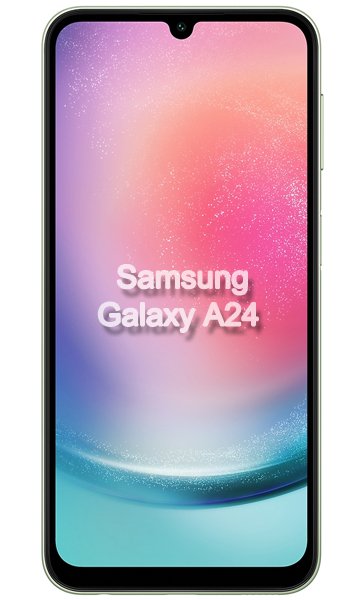
Samsung Galaxy A24 4G
Smartphone 2
-603.jpg)
Xiaomi Redmi Note 12 (Global)
Smartphone 3
Differences between Samsung Galaxy A24 4G and Xiaomi Redmi Note 12 (Global) - Which to Choose?
Reasons to consider the Samsung Galaxy A24 4G:
- Runs on the latest Android 13, upgradable to Android 14, with Samsung's One UI 6.
- Equipped with a Super AMOLED display with a high peak brightness of 1000 nits and 90Hz refresh rate.
- Camera system includes OIS (Optical Image Stabilization) for the main 50 MP sensor.
- Supports Bluetooth 5.3.
- Has a dedicated microSDXC card slot for storage expansion without sacrificing a SIM slot.
- Higher AnTuTu v9 benchmark score of 370758, potentially indicating better performance.
- Available NFC is market/region dependent.
- Has fast charging at 25W.
Reasons to consider the Xiaomi Redmi Note 12 (Global):
- 5G connectivity support for faster data speeds.
- The display is protected by Corning Gorilla Glass 3.
- Features a slightly larger screen at 6.67 inches with a higher refresh rate of 120Hz.
- Comes with IP53 rating for dust and splash resistance.
- Has a higher resolution ultra-wide camera at 8 MP.
- Infrared blaster included for controlling infrared-enabled devices.
- Has 24-bit/192kHz audio for potential improvements in sound quality.
- Faster fast charging at 33W.
- Is lighter in weight at 188g compared to 195g of its competitor.
Selecting the better smartphone depends on individual needs like the preference for display quality, camera capabilities, performance, durability features, or the need for 5G connectivity.
Samsung Galaxy A24 4G or Xiaomi Redmi Note 12 (Global) Specs Comparison
or
 Common specs
| Brand and model | Samsung Galaxy A24 4G | Xiaomi Redmi Note 12 (Global) | |
| Rating | (+2) | (+2) | |
| Release date | 2023, April 19 | 2022, October 27 | |
| Dimensions (HxWxD) | 162.1 x 77.6 x 8.3 mm | 6.38 x 6.38 x 3.06 in | 165.9 x 76.2 x 8 mm | 6.53 x 6.53 x 3 in | |
| Weight | 195 g | 6.88 oz | 188 g | 6.63 oz | |
| Body Build | Glass front, plastic frame, plastic back | ||
| Case | buy from Amazon | buy from Amazon | |
| Colors | Black, Lime Green, Blue gradient, Dark red | Frosted Green, Matte Black, Mystique Blue | |
| Battery | 5000 mAh, Li-Po, non-removable | 5000 mAh, Li-Po, non-removable | |
| Approximate price | 180 EUR | 180 EUR | |
| Check price | from Amazon | from Amazon |
 Screen
| Technology | Super AMOLED | AMOLED | |
| Touchscreen | capacitive touchscreen | capacitive touchscreen | |
| Display colors | 16M | 16M | |
| Screen size | 6.5" in | 6.67" in | |
| Screen area | 103.7 cm2 | 107.4 cm2 | |
| Screen format | 19.5:9 (height:width) | 20:9 (height:width) | |
| Screen to body ratio | 82.4% | 85.0% | |
| Screen resolution | 1080 x 2340 px | 1080 x 2400 px | |
| Screen PPI /points per inch/ | 396 PPI | 395 PPI | |
| Screen protection | Corning Gorilla Glass 3 | ||
| Other specs | - 90Hz, 1000 nits (peak) -Always-on display |
- 120Hz -1200 nits (peak) |
|
| Screen protector | buy from Amazon | buy from Amazon |
 Camera and Video
| Rear camera, main | 50 MP, Triple | 48 MP, Triple | |
| Camera specs | -50 MP, f/1.8, 27mm (wide), 1/2.76", 0.64µm, PDAF, OIS -5 MP, f/2.2, 17mm, 123˚ (ultrawide), 1/5.0", 1.12µm -2 MP, f/2.4, (macro) |
-48 MP, f/1.8, (wide), PDAF -8 MP, f/2.2, (ultrawide) -2 MP, f/2.4, (macro) |
|
| Functions | LED flash, panorama, HDR | Dual-LED dual-tone flash, HDR, panorama | |
| Video | 1080p@30fps, gyro-EIS | 1080p@30fps | |
| Front camera, selfie | 13 MP, Single | 13 MP, Single | |
| Specifications | 13 MP, f/2.2, 25mm (wide), 1/3.06", 1.12µm | 13 MP, f/2.5, (wide) | |
| Functions | HDR | ||
| Video | 1080p@30fps | 1080p@30fps |
 Performance
| Operating system - OS | Android 13, up to 4 major Android upgrades, One UI 6 | Android 12, MIUI 13 | |
| Chipset | - Mediatek Helio G99 (6 nm) | - Qualcomm SM4375 Snapdragon 4 Gen 1 (6 nm) | |
| CPU | - Octa-core (2x2.2 GHz Cortex-A76 & 6x2.0 GHz Cortex-A55) | - Octa-core (2x2.0 GHz Cortex-A78 & 6x1.8 GHz Cortex-A55) | |
| GPU | Mali-G57 MC2 | Adreno 619 | |
| External memory | microSDXC (dedicated slot) | microSDXC (uses shared SIM slot) | |
| Internal memory | 128GB 4GB RAM, 128GB 6GB RAM, 128GB 8GB RAM | 128GB 4GB RAM, 128GB 6GB RAM |
 Benchmark
| Antutu 9 Total | 370758 | 389687 | |
| GeekBench 5 Single Core | 561 | 602 | |
| GeekBench 5 Multi-Core | 1943 | 1891 |
 Communication and Connectivity
| SIM card | Single SIM (Nano-SIM) or Dual SIM (Nano-SIM, dual stand-by) | Hybrid Dual SIM (Nano-SIM, dual stand-by) | |
| Network | GSM / HSPA / LTE | GSM / HSPA / LTE / 5G | |
| Bands | -2G - GSM 850 / 900 / 1800 / 1900 - SIM 1 & SIM 2 (dual-SIM only) -3G - HSDPA 850 / 900 / 2100 -4G - 1, 3, 5, 7, 8, 20, 28, 38, 40, 41 |
-2G - GSM 850 / 900 / 1800 / 1900 - SIM 1 & SIM 2 -3G - HSDPA 850 / 900 / 2100 -4G - 1, 3, 5, 8, 40, 41 -5G - 1, 3, 5, 8, 28, 40, 78 SA/NSA |
|
| Speed | HSPA, LTE | HSPA, LTE-A (CA), 5G | |
| GPRS | Yes | Yes | |
| Edge | Yes | Yes | |
| Wi-Fi | Wi-Fi 802.11 a/b/g/n/ac, dual-band, Wi-Fi Direct | Wi-Fi 802.11 a/b/g/n/ac, dual-band | |
| GPS | GPS, GLONASS, GALILEO, BDS, QZSS | GPS, GLONASS | |
| NFC | Yes (market/region dependent) | No | |
| USB | USB Type-C 2.0 | USB Type-C 2.0, OTG | |
| Bluetooth | 5.3, A2DP, LE | 5.1, A2DP, LE | |
| Harmful irradiation |
SAR EU - 0.41 W/kg (head) 1.30 W/kg (body) |
 Music and Audio
| Radio | |||
| Headphone jack | Yes | Yes | |
| Others | - 24-bit/192kHz audio |
 Other features
| Sensors | - Fingerprint (side-mounted), accelerometer, gyro, compass, proximity | - Fingerprint (side-mounted), accelerometer, gyro, proximity, compass , Infrared port | |
| Other extras |
- Virtual proximity sensing - 25W Fast charging |
- Fast charging 33W, 50% in 22 min - IP53, dust and splash resistant |
|
| Versions |
- Not to be confused with Xiaomi Redmi Note 12 for China market |
Reviews and Opinions on Samsung Galaxy A24 4G and Xiaomi Redmi Note 12 (Global)
If you had to recommend one of these phones to a friend, which one would it be and why? Share your arguments using the Add Opinion button!