
Apple iPhone 14 Pro Max vs Samsung Galaxy S23 Ultra compare
Smartphone 1
Remove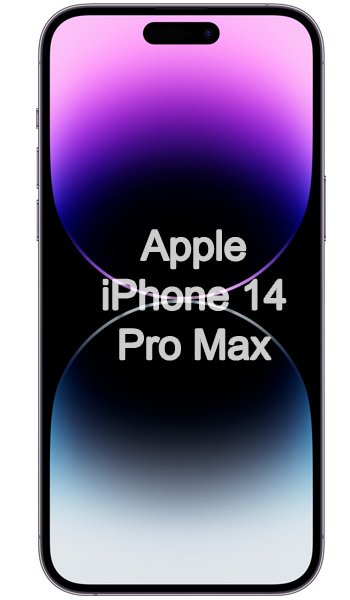
Apple iPhone 14 Pro Max
Smartphone 2
Remove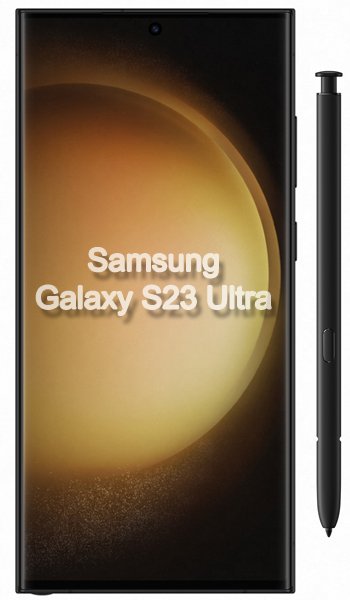
Samsung Galaxy S23 Ultra
Smartphone 3
Apple iPhone 14 Pro Max vs Samsung Galaxy S23 Ultra
Today, we're going to compare two of the hottest smartphones on the market - the Samsung Galaxy S23 Ultra and the Apple iPhone 14 Pro Max. You might be wondering which one is better and which one you should choose. Don't worry; I'm here to help you make an informed decision! So, let's dive into the main differences between these two giants.
First, let's talk about the screen. The Samsung Galaxy S23 Ultra has a 6.8-inch Dynamic AMOLED 2X display with a resolution of 1440 x 3088 pixels and a 120Hz refresh rate. On the other hand, the iPhone 14 Pro Max sports a slightly smaller 6.7-inch LTPO Super Retina XDR OLED screen with a resolution of 1290 x 2796 pixels and also a 120Hz refresh rate. So, if you're into watching videos or playing games on your phone, you might find the Galaxy S23 Ultra's larger and sharper screen more appealing.
Next up is the camera. The Galaxy S23 Ultra has a fantastic quad-camera setup with a whopping 200 MP primary sensor! It also includes three other cameras for telephoto, periscope telephoto, and ultrawide shots. The iPhone 14 Pro Max features a triple-camera system with a 48 MP primary sensor, a telephoto lens, and an ultrawide lens. Both phones have impressive camera capabilities, but the Galaxy S23 Ultra's 200 MP sensor might give you an edge if photography is your passion.
Now, let's discuss performance. The Samsung Galaxy S23 Ultra is powered by the Qualcomm Snapdragon 8 Gen 2 chipset with an octa-core CPU, while the iPhone 14 Pro Max comes with Apple's A16 Bionic chip and a hexa-core CPU. Although both phones are super fast, the Galaxy S23 Ultra offers more RAM options, with up to 12GB of RAM, compared to the iPhone 14 Pro Max's 6GB of RAM. This means the Galaxy S23 Ultra might perform better when multitasking or running memory-intensive apps.
Battery life is another crucial aspect to consider. The Galaxy S23 Ultra comes with a 5000mAh battery and supports 45W fast charging, while the iPhone 14 Pro Max has a 4323mAh battery with MagSafe fast wireless charging. While both phones will get you through the day, the Galaxy S23 Ultra's larger battery capacity might last longer, especially when using power-hungry apps or gaming.
In terms of storage, both smartphones offer multiple options, starting at 128GB and going up to 1TB. However, the Samsung Galaxy S23 Ultra provides more RAM configurations, which can be helpful for heavy users. It's important to note that neither phone has a memory card slot, so you'll have to choose your storage size wisely.
Design and build quality are pretty similar for both devices, with glass fronts and backs, and sturdy frames. The Samsung Galaxy S23 Ultra uses Corning Gorilla Glass Victus 2 for added protection, while the iPhone 14 Pro Max has Ceramic Shield glass. Both phones are water and dust resistant, with the iPhone 14 Pro Max having a slightly higher resistance rating (up to 6m for 30 mins) compared to the Galaxy S23 Ultra (up to 1.5m for 30 mins).
Lastly, the price. The Samsung Galaxy S23 Ultra starts at 1400 EUR, whereas the iPhone 14 Pro Max begins at 1499 EUR. Depending on your budget, you may find one more affordable than the other. However, it's essential to consider the features and performance you're getting for the price.
So, which one should you choose? It really depends on your personal preferences and priorities. If you're a fan of a larger and sharper screen, better battery life, more RAM options, and an exceptional camera, the Samsung Galaxy S23 Ultra might be the phone for you. On the other hand, if you're an Apple enthusiast who values design, build quality, and seamless integration with other Apple devices, the iPhone 14 Pro Max could be your perfect match.
At the end of the day, both the Samsung Galaxy S23 Ultra and the Apple iPhone 14 Pro Max are fantastic smartphones, and you can't go wrong with either choice. Think about what matters most to you and how you'll be using your phone daily, and you'll find the best option that suits your needs.
 Common specs
| Brand and model | Apple iPhone 14 Pro Max | Samsung Galaxy S23 Ultra | |
| Rating | (+22) | (+5) | |
| Review | Apple iPhone 14 Pro Max Review | Samsung Galaxy S23 Ultra Review | |
| Release date | 2022, September 07 | 2023, February 01 | |
| Dimensions (HxWxD) | 160.7 x 77.6 x 7.9 mm | 6.33 x 6.33 x 3.06 in | 163.4 x 78.1 x 8.9 mm | 6.43 x 6.43 x 3.07 in | |
| Weight | 240 g | 8.47 oz | 234 g | 8.25 oz | |
| Body Build | Glass front, glass back, stainless steel frame | Glass front (Gorilla Glass Victus 2), glass back (Gorilla Glass Victus 2), aluminum frame | |
| Colors | Space Black, Silver, Gold, Deep Purple | Phantom Black, Green, Cream, Lavender, Graphite, Sky Blue, Lime, Red, BMW M Edition | |
| Battery | 4323 mAh, Li-Ion | 5000 mAh, Li-Ion | |
| Body Form | Apple | Samsung | |
| Approximate price | $ 459.99 | $ 499.99 |
 Screen
| Technology | LTPO Super Retina XDR OLED | Dynamic AMOLED 2X | |
| Touchscreen | capacitive touchscreen | capacitive touchscreen | |
| Display colors | 16M | 16M | |
| Screen size | 6.7" inc | 6.8" inc | |
| Screen area | 110.2 cm2 | 114.7 cm2 | |
| Screen format | 19.5:9 (height:width) | 19.3:9 (height:width) | |
| Screen to body ratio | 88.3% | 89.9% | |
| Screen resolution | 1290 x 2796 px | 1440 x 3088 px | |
| Screen PPI /points per inch/ | 460 PPI | 500 PPI | |
| Screen protection | Ceramic Shield glass | Corning Gorilla Glass Victus 2 | |
| Other specs | - 120Hz, HDR10, Dolby Vision, 1000 nits (typ), 2000 nits (HBM) - |
- 120Hz, HDR10+, 1200 nits (HBM), 1750 nits (peak) - |
 Camera and Video
| Rear camera, main | 48 MP, Triple | 200 MP, Quad | |
| Camera specs | -48 MP, f/1.8, 24mm (wide), 1/1.28", 1.22µm, dual pixel PDAF, sensor-shift OIS -12 MP, f/2.8, 77mm (telephoto), 1/3.5", 1.0µm, PDAF, OIS, 3x optical zoom -12 MP, f/2.2, 13mm, 120˚ (ultrawide), 1/2.55", 1.4µm, dual pixel PDAF -TOF 3D LiDAR scanner (depth) |
-200 MP, f/1.7, 24mm (wide), 1/1.3", 0.6µm, multi-directional PDAF, OIS -10 MP, f/2.4, 70mm (telephoto), 1/3.52", 1.12µm, PDAF, OIS, 3x optical zoom -10 MP, f/4.9, 230mm (periscope telephoto), 1/3.52", 1.12µm, PDAF, OIS, 10x optical zoom -12 MP, f/2.2, 13mm, 120˚ (ultrawide), 1/2.55", 1.4µm, dual pixel PDAF, Super Steady video |
|
| Functions | Dual-LED dual-tone flash, HDR (photo/panorama) | Laser AF, LED flash, auto-HDR, panorama | |
| Video | 4K@24/25/30/60fps, 1080p@25/30/60/120/240fps, 10-bit HDR, Dolby Vision HDR (up to 60fps), ProRes, stereo sound rec. | 8K@24/30fps, 4K@30/60fps, 1080p@30/60/120/240fps, HDR10+, stereo sound rec., gyro-EIS | |
| DxOMark Main Score | 146 | 140 | |
| DxOMark Photo | 143 | 139 | |
| DxOMark Video | 149 | 137 | |
| Front camera, selfie | 12 MP, Single | 12 MP, Single | |
| Specifications | 12 MP, f/1.9, 23mm (wide), 1/3.6", 1.0µm, PDAF, OIS SL 3D, (depth/biometrics sensor) |
12 MP, f/2.2, 26mm (wide), 1/3.2", 1.12µm, dual pixel PDAF | |
| Functions | HDR | HDR, HDR10+ | |
| Video | 4K@24/25/30/60fps, 1080p@25/30/60/120fps, gyro-EIS | 4K@30/60fps, 1080p@30fps | |
| DxOMark Selfie Score | 145 | 141 | |
| DxOMark Photo | 139 | 139 | |
| DxOMark Video | 154 | 145 |
 Performance
| Operating system - OS | iOS 16, upgradable to iOS 26.4 | Android 13, up to 4 major Android upgrades, One UI 8 | |
| Chipset | - Apple A16 Bionic (4 nm) | - Qualcomm SM8550-AC Snapdragon 8 Gen 2 (4 nm) | |
| Processor CPU | - Hexa-core (2x3.46 GHz Everest + 4x2.02 GHz Sawtooth) | - Octa-core (1x3.36 GHz Cortex-X3 & 2x2.8 GHz Cortex-A715 & 2x2.8 GHz Cortex-A710 & 3x2.0 GHz Cortex-A510) | |
| Graphics processor GPU | Apple GPU (5-core graphics) | Adreno 740 | |
| External memory | No | No | |
| Internal memory | 128GB 6GB RAM, 256GB 6GB RAM, 512GB 6GB RAM, 1TB 6GB RAM | 256GB 8GB RAM, 256GB 12GB RAM, 512GB 12GB RAM, 1TB 12GB RAM |
 Benchmark
| Antutu 10 Total | 1442590 | 1530695 | |
| Antutu 10 CPU | 376051 | 377291 | |
| Antutu 10 GPU | 470781 | 595608 | |
| Antutu 10 Mem | 268247 | 286984 | |
| Antutu 10 UX | 376051 | 377291 | |
| Antutu 9 Total | 973003 | 1287951 | |
| GeekBench 6 Single Core | 2544 | 1883 | |
| GeekBench 6 Multi Core | 6464 | 4993 | |
| GeekBench 6 OpenCL | 8807 | ||
| GeekBench 6 Vulkan | 5815 | ||
| GeekBench 6 Metal | 22383 | ||
| GeekBench 5 Single Core | 1872 | 1396 | |
| GeekBench 5 Multi-Core | 5349 | 4882 |
 Communication and Connectivity
| SIM card | · Nano-SIM + eSIM + eSIM (max 2 at a time; International) · eSIM + eSIM (8 or more, max 2 at a time; USA) · Nano-SIM + Nano-SIM (China) |
· Nano-SIM + eSIM · Nano-SIM + Nano-SIM + eSIM (max 2 at a time) |
|
| Network | GSM / CDMA / HSPA / EVDO / LTE / 5G | GSM / CDMA / HSPA / EVDO / LTE / 5G | |
Show all network frequencies: |
|||
| Speed | HSPA, LTE, 5G, EV-DO Rev.A 3.1 Mbps | HSPA, LTE (CA), 5G | |
| GPRS | Yes | Yes | |
| Edge | Yes | Yes | |
| Wi-Fi | Wi-Fi 802.11 a/b/g/n/ac/6, dual-band, hotspot | Wi-Fi 802.11 a/b/g/n/ac/6e, tri-band, Wi-Fi Direct | |
| GPS | GPS (L1+L5), GLONASS, GALILEO, BDS, QZSS | GPS, GALILEO, GLONASS, BDS, QZSS | |
| NFC | Yes | Yes | |
| USB | Lightning, USB 2.0 | USB Type-C 3.2, OTG | |
| Bluetooth | 5.3, A2DP, LE | 5.3, A2DP, LE | |
| Harmful irradiation |
SAR - 1.15 W/kg (head) 1.07 W/kg (body) SAR EU - 0.99 W/kg (head) 0.98 W/kg (body) |
SAR - 1.12 W/kg (head) 0.92 W/kg (body) SAR EU - 0.96 W/kg (head) 1.40 W/kg (body) |
|
 Music and Audio
| Radio | No | No | |
| Headphone jack | No | No | |
| Others | - High-bitrate audio support |
 Other features
| Sensors | - Face ID, accelerometer, gyro, proximity, compass, barometer | - Fingerprint (under display, ultrasonic), accelerometer, gyro, proximity, compass, barometer | |
| Other extras |
- Ultra Wideband (UWB) support -Emergency SOS via satellite (SMS sending/receiving) - Fast charging, Power Delivery 2.0, 50% in 30 min -15W Wireless charging (MagSafe) -15W Wireless charging (Qi2) - requires iOS 17.2 update - IP68 dust tight and water resistant (immersible up to 6m for 30 min) -Apple Pay (Visa, MasterCard, AMEX certified) |
- Samsung DeX, Samsung Wireless DeX (desktop experience support) -Ultra Wideband (UWB) support - 45W Fast charging, Power Delivery 3.0, 65% in 30 min -15W Wireless charging (Qi) -4.5W Reverse wireless charging - IP68 dust tight and water resistant (immersible up to 1.5m for 30 min) -Armor aluminum frame -Stylus (Bluetooth integration, accelerometer, gyro) |
|
| Versions |
- Versions: A2894 (International); A2651 (USA); A2893 (Canada, Japan); A2896 (China, Hong Kong); A2895 (Russia) |
Share on Share on