
Huawei Y9 (2018) vs Xiaomi Redmi 10A compare
The best smartphone comparison tool: compare Huawei Y9 (2018) vs Xiaomi Redmi 10A and choose the best model for you
Smartphone 1
Remove-473.jpg)
Huawei Y9 (2018)
Smartphone 2
Remove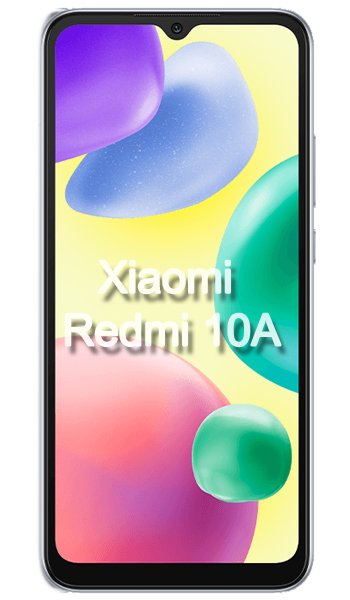
Xiaomi Redmi 10A
Smartphone 3
Huawei Y9 (2018) vs Xiaomi Redmi 10A
What is the difference between the Huawei Y9 (2018) and Xiaomi Redmi 10A? Which one is better? The answers to these questions and many more can be found here in this detailed comparison of the two phones. Discover the differences in specs between these two desirable devices, from screen size to battery life, in the table below. We have all the information you need to choose the best phone for you.
or
 Common specs
| Brand and model | Huawei Y9 (2018) | Xiaomi Redmi 10A | |
| Rating | (+0) | (+0) | |
| Review | Huawei Y9 (2018) Review | ||
| Release date | 2018, March | 2022, March 29 | |
| Dimensions (HxWxD) | 157.2 x 75.3 x 7.9 mm | 6.19 x 6.19 x 2.96 in | 164.9 x 77.1 x 9 mm | 6.49 x 6.49 x 3.04 in | |
| Weight | 170 g | 6 oz | 194 g | 6.84 oz | |
| Body Build | Front glass, aluminum body | ||
| Colors | Black, Gold, Blue | Charcoal Black, Sea Blue, Slate Grey | |
| Battery | 4000 mAh, Non-removable Li-Ion | 5000 mAh, Li-Ion, non-removable | |
| Approximate price | 220 EUR | 100 EUR |
 Screen
| Technology | IPS LCD | IPS LCD | |
| Touchscreen | capacitive touchscreen | capacitive touchscreen | |
| Display colors | 16M | 16M | |
| Screen size | 5.93" inc | 6.53" inc | |
| Screen area | 90.7 cm2 | 102.9 cm2 | |
| Screen format | 18:9 (height:width) | 20:9 (height:width) | |
| Screen to body ratio | 76.7% | 81.0% | |
| Screen resolution | 1080 x 2160 px | 720 x 1600 px | |
| Screen PPI /points per inch/ | 407 PPI | 269 PPI | |
| Other specs | - 400 nits (typ) |
 Camera and Video
| Rear camera, main | 16 MP, Dual | 13 MP, Single | |
| Camera specs | -16 MP, f/2.2, 27mm (wide), PDAF -2 MP, depth sensor |
-13 MP, f/2.2, (wide), 1.0µm, AF | |
| Functions | LED flash, panorama, HDR | LED flash | |
| Video | 1080p@30fps | 1080p@30fps | |
| Front camera, selfie | 13 MP, Dual | 5 MP, Single | |
| Specifications | 13 MP, f/2.0, 26mm (wide) 2 MP, depth sensor |
5 MP | |
| Functions | HDR | ||
| Video | 1080p@30fps | 1080p@30fps |
 Performance
| Operating system - OS | Android 8.0 (Oreo); EMUI 8 | Android 11, MIUI 12.5 | |
| Chipset | - HiSilicon Kirin 659 (16 nm) | - MediaTek MT6762G Helio G25 (12 nm) | |
| Processor CPU | - Octa-core (4x2.36 GHz Cortex-A53 & 4x1.7 GHz Cortex-A53) | - Octa-core (4x2.0 GHz Cortex-A53 & 4x1.5 GHz Cortex-A53) | |
| Graphics processor GPU | Mali-T830 MP2 | PowerVR GE8320 | |
| External memory | microSD, up to 256 GB (dedicated slot) | microSDXC | |
| Internal memory | 64/128 GB, 4 GB RAM 32 GB, 3 GB RAM | 32GB 2GB RAM, 32GB 3GB RAM, 64GB 3GB RAM, 64GB 4GB RAM, 128GB 4GB RAM, 128GB 6GB RAM |
 Benchmark
| Antutu 9 Total | 102639 | ||
| Antutu 7 Total | |||
| GeekBench 5 Single Core | 137 | ||
| GeekBench 5 Multi-Core | 655 |
 Communication and Connectivity
| SIM card | Dual SIM (Nano-SIM, dual stand-by) | Dual SIM (Nano-SIM, dual stand-by) | |
| Network | GSM / HSPA / LTE | GSM / HSPA / CDMA2000 / LTE | |
Show all network frequencies: |
|||
| Speed | HSPA 42.2/5.76 Mbps, LTE-A (2CA) Cat6 300/50 Mbps | HSPA 42.2/5.76 Mbps, LTE | |
| GPRS | Yes | Yes | |
| Edge | Yes | Yes | |
| Wi-Fi | Wi-Fi 802.11 b/g/n, Wi-Fi Direct, hotspot | Wi-Fi 802.11 a/b/g/n, Wi-Fi Direct, hotspot | |
| GPS | Yes, with A-GPS, GLONASS, BDS | Yes, with A-GPS, GLONASS, BDS | |
| NFC | No | ||
| USB | microUSB 2.0 | microUSB 2.0 | |
| Bluetooth | 4.2, A2DP, LE, aptX | 5.0, A2DP, LE | |
 Music and Audio
| Radio | FM radio | No | |
| Headphone jack | Yes | Yes | |
| Others | - Active noise cancellation with dedicated mic |
 Other features
| Sensors | - Fingerprint (rear-mounted), accelerometer, gyro (market dependent), proximity, compass | - Fingerprint (rear-mounted), accelerometer, proximity | |
| Other extras | |||
| Versions |
- Also known as Huawei Enjoy 8 Plus in China |
Share on Share on